Sealed worlds. Strange physics. The only way out is the one you build.
OUTBOX is a co-op logistics game. You and up to five friends cross a gate into a small hostile world, plant a machine that hauls its freight home, and come back to one shared street where your house is your factory — running, audibly, while you’re somewhere else entirely.
It isn’t a biome with a new coat of paint each time. Every world breaks one rule about how matter behaves — nothing floats, cargo carries a charge, freight only moves at the speed of a beam — and the belts, chutes and lifters that worked in the last one won’t work in this one. You work it out standing up, with a clock running.
There is no scripting console and nothing to type. If you can see why a line jammed, you can fix it: move a splitter, add a lifter, catch the overflow. Depth comes from a small set of parts, not a programming layer bolted onto the side.
No lootboxes, no gacha, no energy timers, no second currency, no player weapons, no health bars. Judged on what you take — and on what you leave behind.
What you actually do
Belts, splitters, lifters, sinks — placed by hand, in first person, one block at a time. A flow-graph analyser compiles whatever you’ve built into a real throughput rate; the cargo you see tumbling down the line is a picture of that rate, not a pile of separately simulated items. The server is honest about what it’s actually moving, and the picture on screen never gets to lie about it.
Brute force always works: you can hand-carry everything, badly, forever. Elegance is the score, and the game never locks you out of either.
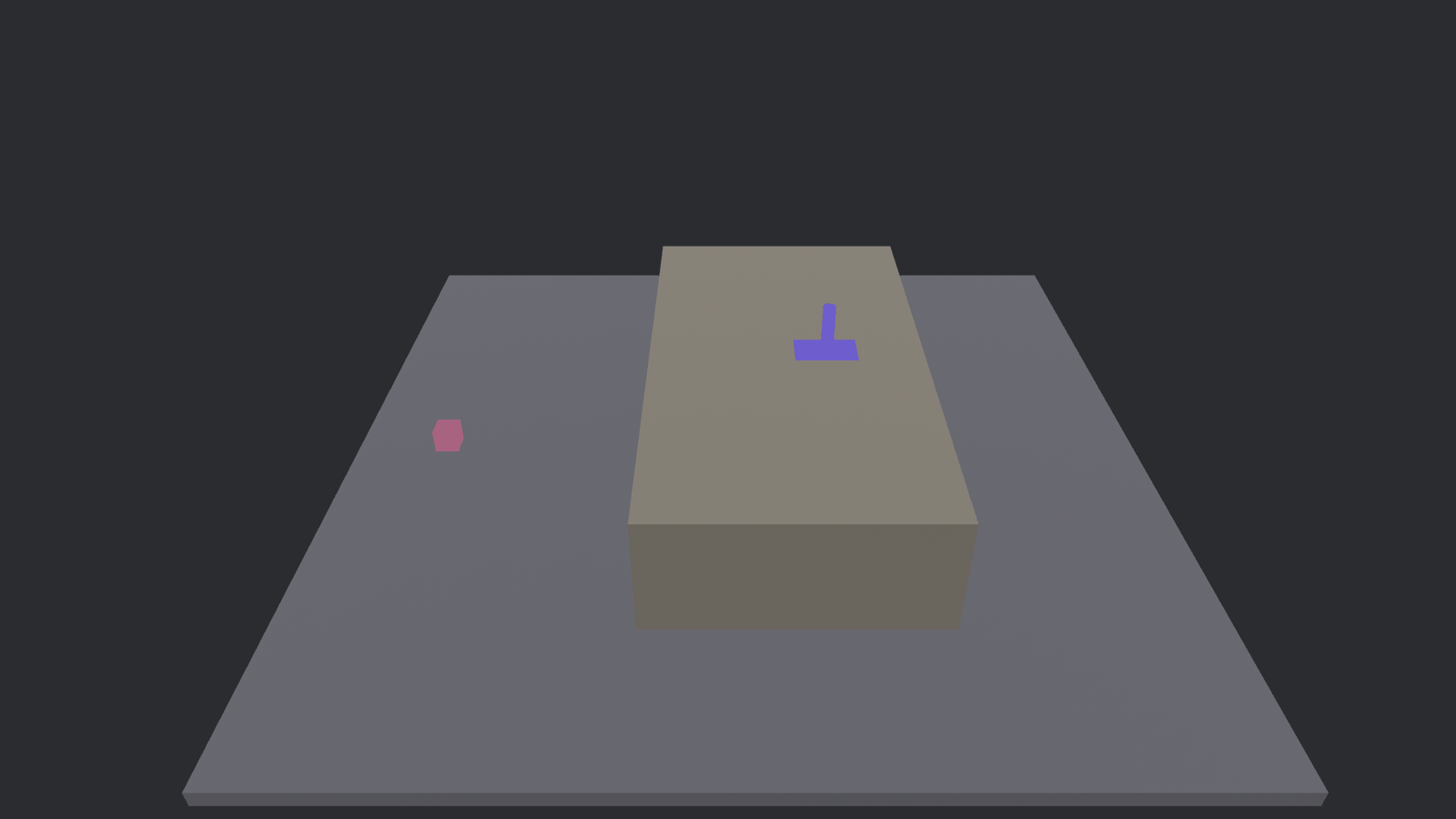
The house is the factory
Back home, in your own container on a real street, the cargo becomes the
thing you build with. Your machines keep running while you’re offline —
that’s the plan, in full, in context/vision.md. It is design, not yet
built: read the roadmap for what actually exists today versus
what’s still ahead, gate by gate.
Where this stands right now
We’d rather you were annoyed at the honest table than sold a trailer full of things that don’t exist yet.
| The design | Done. Fully specified — worlds, the Consignment, the life layer, the lot. |
| The engine | A real headless Bevy server, a real client, talking wss:// over TLS, deployed and reachable right now. |
| Multiplayer | Working. Avatars replicate between clients; every join is credential-checked. |
| The first verb | In progress. Terrain, four block types and the flow-graph analyser exist; the run timer, score screen and loadout rules don’t yet. |
| A release date | Don’t have one. When we do, you’ll get the real one. |
Read the devlog for how each piece actually got built — including the parts that broke in interesting ways — or the roadmap for what’s committed versus what’s still just planned.